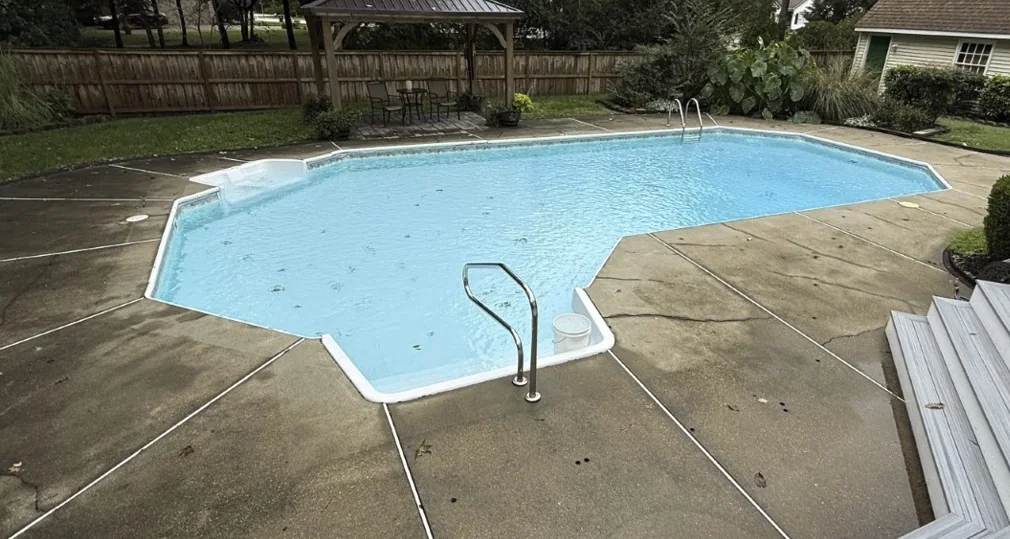
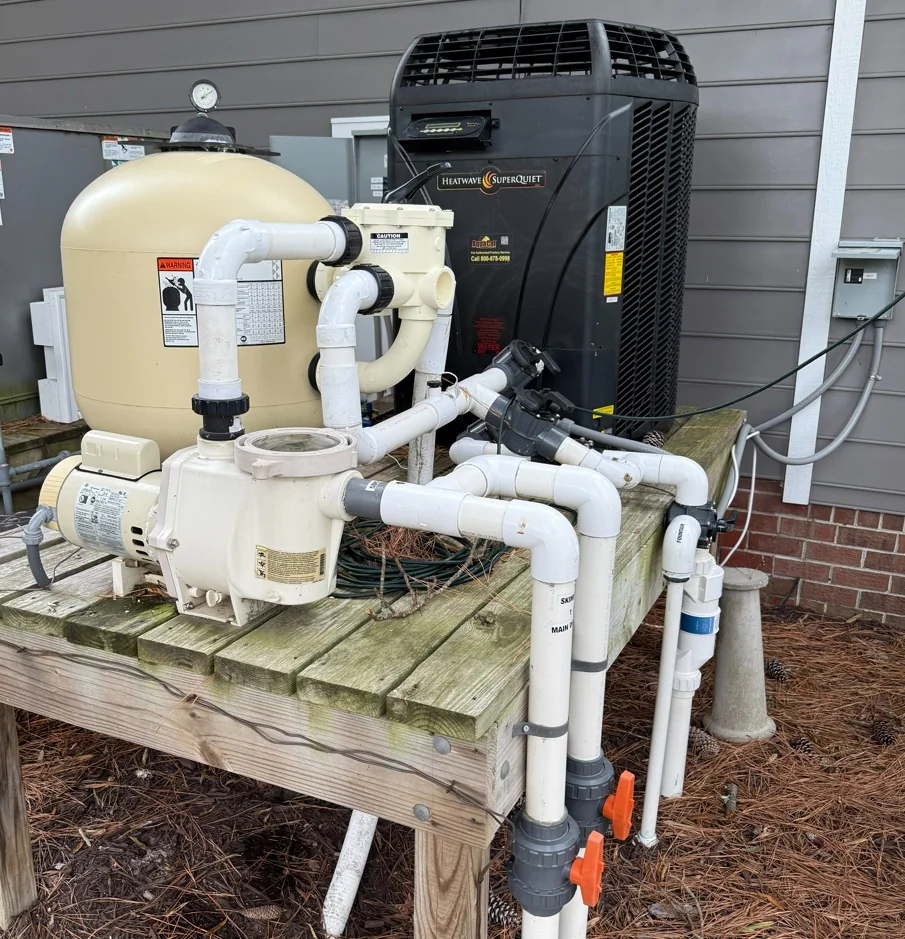
Buying a home with a pool, evaluating the one you own, or planning repairs? Document visible conditions and follow-up questions before your next decision.
Tell us whether you are buying, selling, learning about an existing pool, or planning work. A property deadline, known concern, and current operating condition help the office establish availability and the appropriate scope.
Visible conditions, explained
The agreed inspection scope may cover accessible pool surfaces and surroundings, equipment, exposed plumbing, and visible safety-related features. Normal operation may be observed where access and conditions permit.
Your written report brings together observations, photographs, limitations, and recommendations for further evaluation or repairs. Read the sample inspection report to see how these findings are presented.
Know what requires a separate investigation
A visual inspection does not establish that a pool or buried plumbing is watertight. Pressure testing, underwater leak detection, electrical testing, engineering evaluations, concealed conditions, and compliance certification require separate arrangements where applicable.
A condition report describes what could be observed at the visit. It is not a warranty, a guarantee of safe use, or an automatic repair estimate.
The visible, accessible picture
What can an inspection cover?
The agreed scope and conditions at the property guide the inspection. Access limitations and items that cannot be evaluated are recorded.
01
Pool interior & surroundings
Visible interior surfaces, coping, decking, fittings, and accessible accessories. Interior observations are made from the deck unless additional work is specifically arranged.
02
Equipment & exposed plumbing
Visible pumps, filters, heaters, sanitation equipment, piping, and valves. Operation through normal controls may be observed when equipment is accessible and conditions permit.
03
Visible safety-related features
Accessible barrier components, pool accessories, and visible electrical conditions within the agreed inspection scope. Findings identify observations and follow-up needs; they do not certify code compliance.
04
Photographs & next steps
A written report brings together the observed conditions, supporting photographs, limitations, and recommendations for further evaluation or repairs.
A report you can come back to
See the finding. Understand the next step.
Photographs show the area being described. Written observations, limitations, and recommendations explain what the inspection established and what needs follow-up.
01 / Observation
What was visible and accessible at the time.
02 / Photograph
Supporting views of the area or equipment discussed.
03 / Recommendation
Questions to resolve, further evaluation, or work to consider.
This watermarked sample includes separately arranged leak testing and equipment reference materials. Your report will reflect your pool, the agreed inspection scope, and conditions at the time of the visit.
Tell us about water loss, specific equipment problems, or other concerns before the appointment is arranged.
Leak testing and concealed conditions
A visual inspection does not include pressure testing buried lines, underwater leak detection, dismantling equipment, or examining concealed construction. Those services require a separate scope and may involve a specialist.
Water testing and specialist evaluations
Water chemistry testing, electrical testing, engineering opinions, and compliance certification are not automatic parts of the visual inspection. Ask what can be arranged for your specific concern.
A condition report at a point in time
The report describes what could be observed during the visit. It is not a warranty against future failure or a guarantee that the pool is leak-free or safe for use.
A straightforward start
Your questions. A clear inspection plan.
01
Share the property and your purpose.
Tell us the location, why you need an inspection, any known concerns, and your preferred timeframe.
02
Confirm the scope and access.
Confirm availability, price, equipment access, and any separately arranged evaluations before the visit.
03
Review the findings.
Read the findings and limitations together, then identify follow-up questions or separately proposed work.
Pool inspection inquiries across our region. Contact our Gloucester office about properties in Hampton Roads and the Middle Peninsula. Share the address and timing so we can confirm availability.
Can I request a pool inspection before buying a home?+
Yes. Tell us the property location, inspection purpose, and any contract or decision deadline. Our office will confirm scope and availability; a website inquiry does not reserve an appointment.
Will I receive a written report and photographs?+
The inspection service described here includes a written condition report with supporting photographs, observations, limitations, and recommended next steps. The office confirms the agreed scope before scheduling.
Does an inspection include leak detection?+
A standard visual inspection does not establish that a pool or buried plumbing is watertight. Pressure testing and underwater leak detection are separate investigations. Mention any water-loss concern when you inquire.
Can you inspect a pool that is closed, covered, or not running?+
Current conditions can limit the inspection. Covering, water clarity, winterization, power, and equipment access affect what can be evaluated. Report those conditions so the office can confirm whether and how the inspection can proceed.
Is this a safety or code-compliance certification?+
No. Visible concerns may be documented, but a condition inspection does not replace a required certification, engineering evaluation, or specialist electrical or plumbing assessment.
Are repairs included with the inspection?+
Repairs and further investigations are separate unless expressly included in your written agreement. The report identifies findings and follow-up needs; it is not automatically a repair estimate.
Buying a home with a pool: use the inspection well
Plan a pool inspection before a home purchase: establish scope, share decision deadlines, understand limitations and separate observations from specialist testing.